
Leadership is not about standing above people. It is about walking among them.
“Do you love me? … Feed my sheep.”
John 21:15–17
I have been thinking a lot about Christian leadership lately.
After many years of leading—in churches, ministries, nonprofits, teams, programs, and communities—I have come to realize that leadership is not primarily about position, authority, titles, or even getting things done.
Leadership is about people.
And for a Christian leader, I believe it is also about shepherding.
A shepherd guides. A shepherd leads. A shepherd nurtures. A shepherd protects. A shepherd cares.
And perhaps most importantly, a shepherd knows the people entrusted to them.
That understanding did not come to me from a leadership course. It has been formed over many years of experience—sometimes through beautiful moments, sometimes through difficult relationships, and often through mistakes of my own.
I Learned to Lead by Learning to Serve
I was in high school when I first became involved in student and youth ministries at school and at church. I came from a small school and a small church, and because we were small, I was often stretched to serve in different ways.
I began reaching out to students beyond my own classmates, meeting them during the week through small groups, praying with them, and encouraging them to stand for Jesus.
At church, leadership started much more quietly. I served in Sunday School, gave out snacks, and assisted wherever I could.
I learned to serve before I learned to lead.
Eventually, I found myself leading the Sunday School department, leading the youth fellowship, mentoring students, and organizing youth activities, outreaches, camps, and other events.
That was the beginning of my leadership journey.
Learning to Walk the Talk
But leadership also forced me to look at my own life.
I wasn't always the best student. I had cheated in school. There were times when I was mediocre academically, and I had conflicts with other students too—some of those very typical conflicts that can happen among young people.
But when I chose to follow Jesus seriously, I knew that I could not simply talk about Him. I had to live differently.
I wanted to be holy. I wanted to become more like Christ. And as I began changing, something unexpected happened.
Students began coming to me. They told me their struggles. They opened up about things they were going through. We would pray together.
I remember organizing a “Meet Me at the Flagpole” gathering at school and inviting students to pray for our school. I honestly didn't know how many would come.
But they came.
Students gathered and prayed. I watched some of them form their own small groups, praying and sharing with one another.
That brought me tremendous joy—not simply because an event had succeeded, but because I could see that something had been planted in them.
Leadership Is More Than Being Good at Something
Because our school and church were small, I learned early that you cannot always wait until you are good at something before you serve.
Sometimes you simply have to say yes.
I was stretched to serve in different capacities, not necessarily because they were things I was good at, but because I knew whom I was serving.
I wasn't serving for the applause of people.
I was serving the Lord.
And somehow, when you consistently show up, serve, care, and try to live what you believe, people begin to trust you.
People follow. People open up. People become willing to learn. And eventually, people themselves begin to lead.
As the Team Grows, Leadership Changes
As the number of people I led increased, so did the responsibility.
I once led an organization with fewer than ten staff. Eventually, God expanded my influence to a team of more than one hundred.
That was a huge jump.
I could no longer lead everyone in exactly the same way. I had to develop second-level leaders.
And that's when I learned that there is a big difference between being task-oriented and being people-oriented.
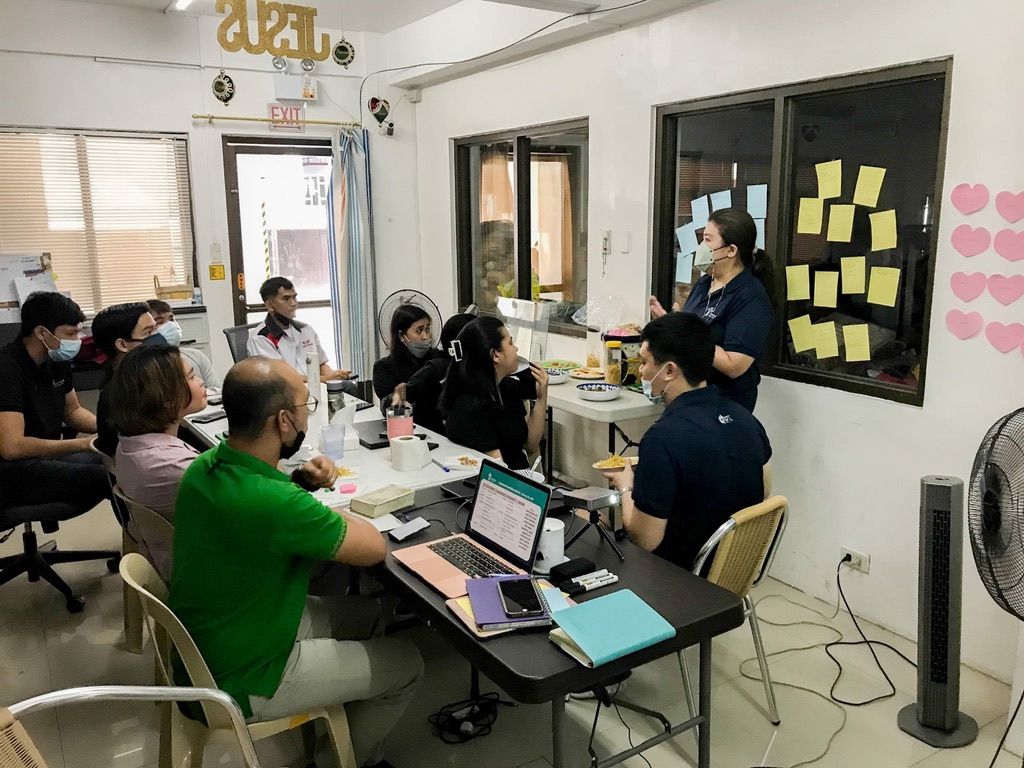
Sometimes shepherding means stopping long enough to listen.
Tasks are relatively easy. You identify what needs to be done, assign it, set a deadline, and follow up.
But people are different.
People take time.
If I am serious about developing someone, I need to know them. I need to understand their strengths—sometimes even the strengths they don't recognize in themselves.
I need to provide vision. I need to activate their potential. I need to help them achieve what they are capable of becoming.
Their success is my success.
But because we are dealing with people and not projects, growth takes time. There are seasons when someone is ready to lead, and seasons when someone needs to wait, learn, mature, or simply grow.
People are not tasks to be completed. They are lives being formed.

Some of the people I have had the privilege of leading were not on my payroll. They volunteered because they believed in the mission.
Sometimes the Hardest People to Lead Are the Ones Who Know a Lot
I have also learned that leadership becomes particularly difficult when the person you are leading is older than you, more experienced than you, or very strong in their own leadership.
I have experienced that firsthand.
At one point in my leadership journey, I found myself working alongside someone who was a strong leader in her own right—knowledgeable, experienced, and with strengths of her own.
As with many relationships, there were differences to navigate. Sometimes people may wonder why responsibilities or roles are arranged differently, especially when everyone brings valuable experience to the table.
That season reminded me that Christian leadership is not ultimately measured by age, experience, or who knows the most. We look to the mission and ultimately to the Lord.
Christian leadership requires something different. I had to preserve my testimony while leading through the conflict.
So I chose not to stoop to the drama. I had to learn that some leadership situations take time to work through, and that not every difficult season needs to be resolved immediately.
That experience taught me something important about leadership: I cannot control how another person responds, but I can choose how I respond. I can choose patience, humility, and faithfulness to the mission.
Sometimes leadership means letting God work in a situation that you cannot fix yourself.
We are not building our own kingdom. We are serving God's kingdom—and sometimes that means trusting God with people, relationships, and outcomes that are beyond our control.
I Had to Learn to Listen
One of the hardest lessons for me has been listening.
I like things fast. I want to understand the situation, process it, solve it, and close the book.
Sometimes I can jump to conclusions because I feel that I have discernment.
But I have learned that discernment does not give me permission to stop listening.
People have different backgrounds, upbringings, experiences, exposures, personalities, and talents. Just because I feel something should be done a certain way doesn't mean that my way is the only way.
So if I truly want to lead people, I have to listen to what they are saying—and hear what they are not saying.
I have to slow down. I have to hear people out.
Because leadership is not about proving that I am right.
Leadership is about understanding the person I have been entrusted to lead.
Relationships Are Bigger Than the Payroll
There is another lesson I have carried with me through the years: people are more than their roles.
Some of the people I once worked with are no longer working in the company. Their positions changed. Their seasons changed. Their workplaces changed.
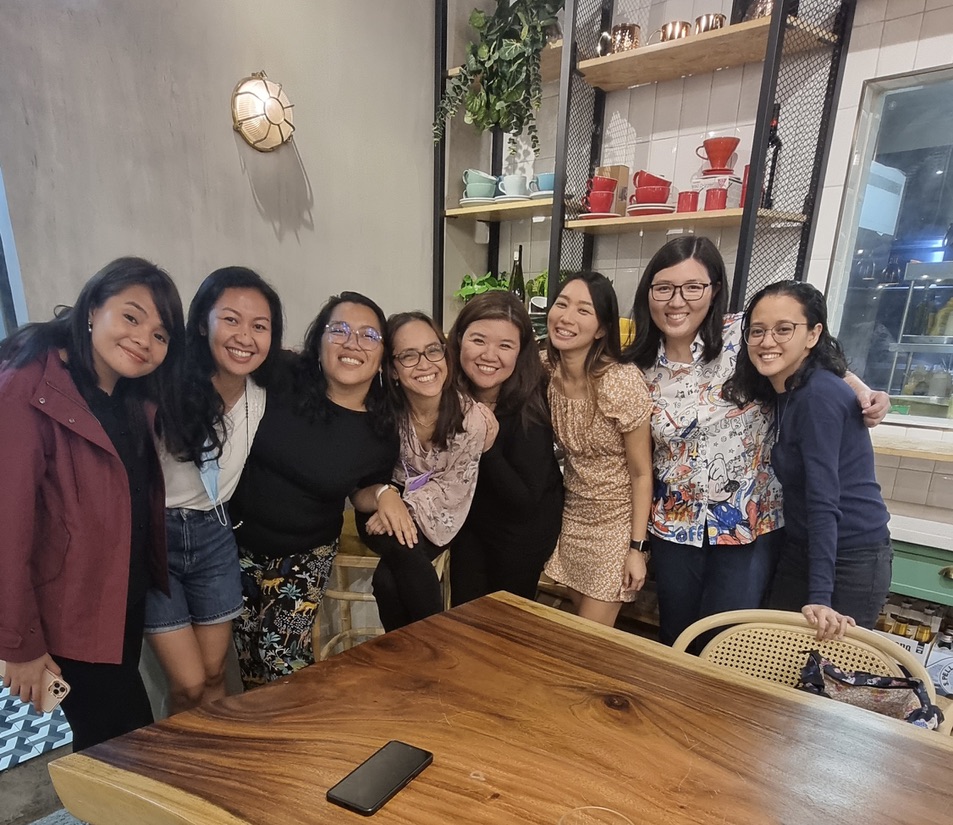
Relationships are bigger than the payroll. Some leadership relationships become lifelong friendships.
But our relationships continued.
We still meet. We still laugh. We still catch up. We still care about one another.
If I only cared about someone because they were part of my team, then perhaps I cared more about the role than the person.
But if the relationship remains even after the organizational connection ends, then something more genuine was built.
People don't care how much you know until they know how much you care.
I've found that this works both ways. When people see that you genuinely care about them first, they become more willing to know what you have to offer.
I Saw Something in Her That She Couldn't Yet See
One of the leaders I had the privilege of developing was Zerah Mae, a social worker when I first met her.
She was doing everything at the home for girls. When I visited, I saw her mopping the dining floor, carrying a child in her arms, and doing whatever she could to keep the home intact.
It was chaotic. But underneath the chaos, I saw something else.
I saw a leader.
I saw her humility and her heart to serve. She was willing to make her hands dirty. What she needed was someone to guide her in delegating work and leading a team.
So I first talked with her and got to know her. Then I challenged her.
She was shocked and kept asking, “Why me?”
But I kept drawing out the personality and heart of a leader that were already in her.
We met frequently. We built her team. I put my confidence in her leadership while mentoring her along the way.
This allowed her to bloom and grow.
I did not leave her. I led from behind.
Once in a while, I would gather her team to encourage them, but I allowed Zerah to lead.
She grew from managing one location to three. She developed leaders too. Today she serves in a leadership position in a social welfare government agency and continues to lead a global youth network as a volunteer.
I am so proud of the woman she has become—more confident, more courageous, and more prayerful.
She is making a difference with her leadership.

I saw something in her that she did not yet see in herself.
The Cost of Caring
Developing people has cost me time and energy.
I always want to come prepared when I develop leaders because I don't want to waste our time. But people are not tasks. They are a matter of season.
Is it their season to lead, or is it their season to wait and grow?
One-on-one development takes a lot of energy and time. Just the time to stop and listen can be difficult.
What keeps me going is the bigger mission I have received from God—the calling.
I also know that all I do for the Lord is not in vain. I may not see it on my timeline, but the seeds will grow.
And honestly, I don't care who gets the credit as long as God is praised.
Sometimes I am simply tasked to do a certain thing in a person's life. So be it.
I cannot see people as ROI because that is not the way we do it in Christianity. We leave the results to God and the Holy Spirit.
I always look at the bigger picture: expanding God's Kingdom here on earth. I want to do my little part and be faithful to what God has entrusted to me.
There is also a burden that keeps me going. Unless we do something, nothing can be done while time is running out.
Leadership Is Shepherding
When Jesus asked Peter, “Do you love me?”, He did not give him a leadership title or a management strategy.
He said:
“Feed my sheep.”
That has become a picture of leadership that I carry with me.
Guide them. Lead them. Nurture them. Care for them. Listen to them. Develop them. Walk with them.
And when the time comes, be willing to step behind them and let them lead.
Because Christian leadership is not ultimately about how many people report to us. It is about what happens in the lives of the people God has entrusted to us.
The burden keeps me going. There is still so much to be done. Time is moving.
So I want to do my little part—to be faithful, to serve, to care, to develop people, and to shepherd well.
And when I eventually look back on all the years of leadership, I hope I won't remember primarily the programs we completed, the positions we held, or the numbers we achieved.
I hope I remember the people.
Because in the end, leadership is about people.
And for me, Christian leadership begins with one simple question:
Do I care enough to shepherd the people God has placed in front of me?